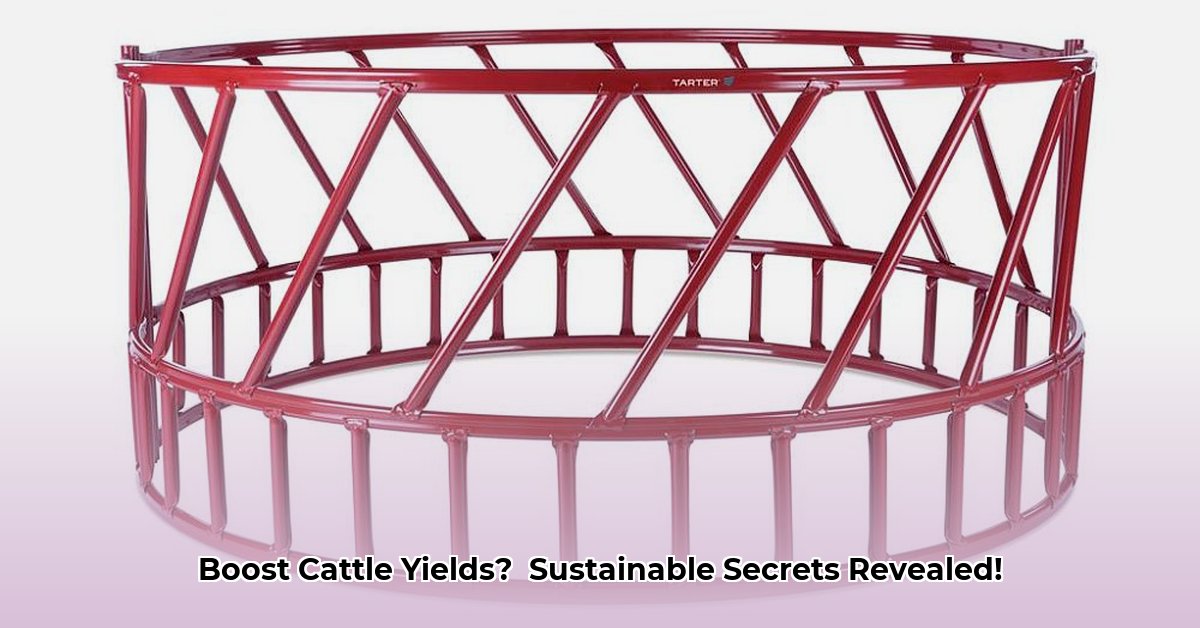
Selecting the Right Cattle Feeder: A Step-by-Step Guide
Choosing the right cattle feeder is crucial for both profitability and sustainability. It's not just about the initial cost; consider long-term efficiency, feed waste reduction, and ease of maintenance. Tractor Supply offers various options, each with its own set of advantages and disadvantages. Let's explore the most common types:
For more information on sustainable ryegrass, check out this resource.
Types of Cattle Feeders: Weighing the Pros and Cons
| Feeder Type | Advantages | Disadvantages | Best Suited For |
|---|---|---|---|
| Troughs | Easy to use, inexpensive, simple cleaning | Often leads to feed waste, not ideal for large herds | Smaller herds, simpler feeding routines |
| Bunks | Reduce wasted feed, better for larger herds | Typically more expensive, require more space | Larger herds, focused on minimizing waste |
| Self-Feeders | Animals have consistent access to feed, less labor-intensive | Higher upfront cost, potential for overeating by some animals | Herds constantly needing access to feed |
Consider these factors before making a decision:
- Herd Size: How many cattle do you have? This directly impacts the feeder's capacity requirements.
- Feed Type: The type of feed (hay, grain, silage) influences the feeder's design and functionality.
- Budget: Establish a realistic budget to narrow down your options.
- Long-Term Goals: Consider future herd expansion and any potential upgrades or modifications you may need.
Sustainable Feeding Strategies for Higher Yields
Sustainable practices aren't just environmentally responsible; they're economically advantageous. By optimizing your feeding strategies, you can reduce costs and improve the health and productivity of your herd.
1. Feed Quality Control: Regularly inspect your feed for spoilage, mold, or contamination. Discard any damaged feed to prevent illness and economic loss. This simple step is often overlooked but is critical for herd health and productivity.
2. Consistent Feeding Schedule: Establishing a regular feeding schedule reduces stress and improves digestion, leading to better weight gain. Consistency improves your cattle's health and reduces waste by preventing over or underfeeding.
3. Minimizing Feed Waste: Observe your cattle's feeding behavior. Are they spilling feed or struggling to access it? Adjust feeder placement or choose a design that minimizes waste. This careful observation can significantly impact your bottom line.
4. Accurate Feed Monitoring: Track feed consumption to optimize rations. Avoid overfeeding, which wastes resources, and underfeeding, which hinders growth. This data-driven approach ensures you're providing the right amount of feed at the right time.
5. Diversifying Feed Sources: Explore locally sourced hay or alternative feed sources to reduce transportation costs and environmental impact. This supports local farmers and promotes a more circular agricultural economy.
Isn't reducing feed waste and increasing efficiency a path to greater profitability? Research shows that implementing these strategies can lead to a 10-15% reduction in feed costs.
Maximizing Your Investment: Feeder Care and Maintenance
Proper care and maintenance extend the lifespan of your feeder and prevent costly repairs.
1. Proper Installation: Strictly adhere to the manufacturer's instructions to ensure safe and efficient operation.
2. Regular Cleaning: Regular cleaning prevents disease and maintains the feeder's structural integrity. This hygiene practice is essential for a healthy herd.
3. Exploring Upgrades: Consider upgrades or accessories, such as feed covers (to prevent spoilage) or automated feeding systems (to save labor).
Beyond the Feeder: Sustainable Practices for a Thriving Operation
Sustainable cattle farming extends beyond selecting an efficient feeder. The following practices contribute to a healthier environment and a more profitable operation.
Local Feed Sourcing: Reducing Transportation Costs and Carbon Footprint.
Choosing locally sourced feed reduces transportation costs and lowers your farm's carbon footprint. Supporting local farmers strengthens your community and promotes economic sustainability. What's more cost-effective: a trip across the state or across the county?
Efficient Manure Management: Turning Waste into a Resource
Effective manure management is crucial for environmental protection and resource recovery. Composting or anaerobic digestion transforms manure into valuable fertilizer, reducing environmental impact and potentially lowering fertilizer costs. This practice aligns with the circular economy model.
Data-Driven Decision Making: Utilizing Technology for Optimization
Implement record-keeping systems to monitor feed costs, weight gain, and manure management. Analyze this data to make informed decisions, optimize your operation's efficiency, and identify areas for improvement.
Dr. Emily Carter, Professor of Agricultural Engineering at the University of California, Davis, emphasizes, "The adoption of data-driven practices is no longer a luxury but a necessity for sustainable and profitable livestock farming."
By integrating these sustainable practices, you can boost your cattle operation's profitability while minimizing its environmental impact. Remember, sustainable agriculture is not simply a trend; it's the future of farming.